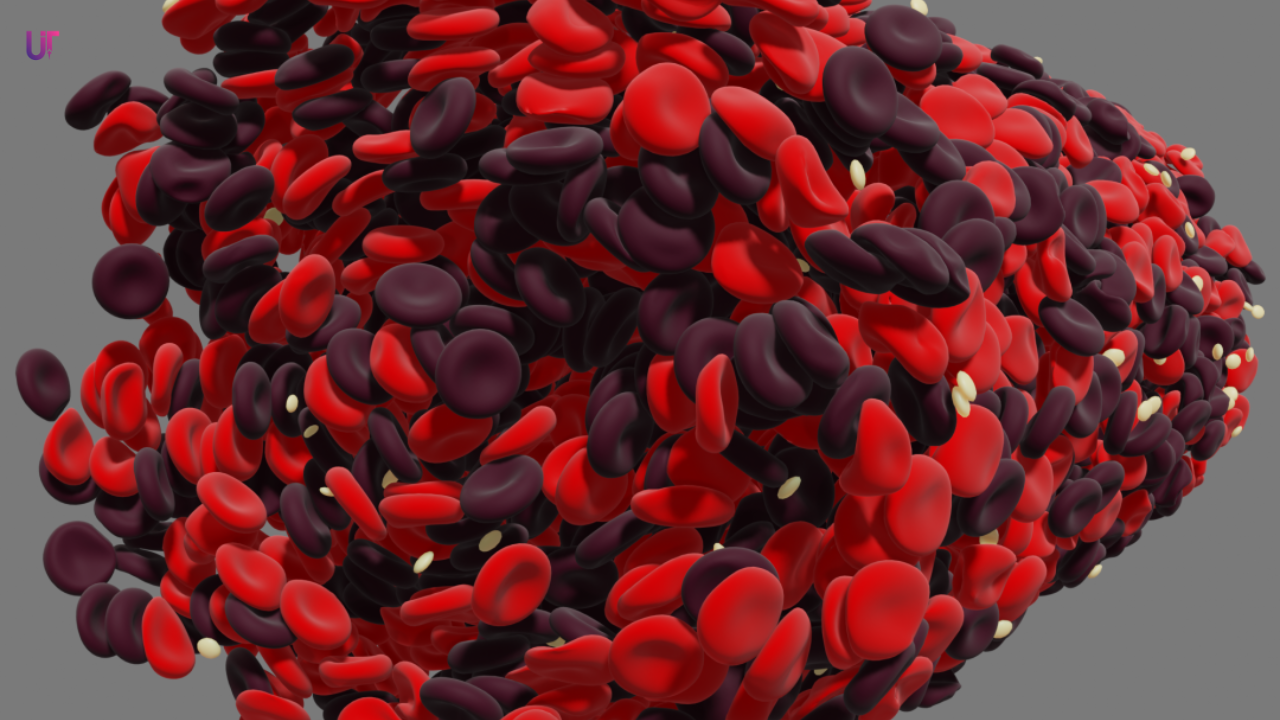
If you could shrink yourself small enough to stand inside a blood vessel, you would realize something surprising:
Your bloodstream behaves almost exactly like a busy highway.
Red blood cells are the cars.
White blood cells are the emergency responders.
The vessel walls are like the edges of the road.
And when there’s trouble ahead—infection, injury, or irritation—the entire “traffic system” reorganizes itself instantly.
This reorganization begins with one quiet but powerful event called cell margination.
At first glance, the word sounds like something from a medical textbook. But the idea behind it is surprisingly human, relatable, and logical. It’s the body’s way of clearing the lane so that emergency workers can get to where they’re needed.
Let’s break it down in a way you will never forget.
The Normal Day: Smooth Traffic, No Panic
On a normal day, your blood moves in a smooth, layered pattern called laminar flow.
Imagine a highway where the center lanes move the fastest. That’s where most cars go.
Similarly, red blood cells (RBCs)—because they are so many—occupy the center of the bloodstream. They zip through the vessel like a packed convoy on an express lane.
Meanwhile, white blood cells (WBCs), the immune warriors, drift quietly along the outer lanes but never quite touch the walls. They are present, alert, but not rushing anywhere.
Everything is peaceful. No alarms. No problems. No need for emergency responders to pull over or take exits.
But the moment inflammation begins—whether from a cut, infection, or irritation—the entire traffic pattern changes.
When Trouble Happens, The Highway Slows
When there is injury or infection, your body widens the blood vessels in that area to allow more blood flow. But ironically, widening the vessels actually slows down the flow.
If you’ve ever noticed how traffic slows when a road widens unexpectedly, you’ll understand this instantly.
Now, here’s where the magic happens.
Slower flow means the red blood cells no longer push the white blood cells inward. Instead, the red cells drift toward the center even more, leaving the outer edges of the “highway” surprisingly open.
Suddenly, there’s space.
And like emergency vehicles noticing an empty lane, the white blood cells begin moving outward—toward the vessel walls.
This outward movement is called margination.
So, What Exactly Is Margination?
Margination means “moving toward the margins.”
It’s the process where white blood cells shift from the middle of the bloodstream toward the vessel wall so they can prepare to exit and deal with a problem.
It’s the body’s version of emergency responders switching to the shoulder lane so they can take the nearest exit to an accident scene.
Before anything dramatic happens—before rolling, before sticking, before squeezing out—this quiet preparation must happen.
Without margination, white blood cells would be stuck in traffic forever.
Why Margination Is Necessary
Think about a fire outbreak in a neighborhood.
If fire trucks never leave the main highway, the burning building will be lost.
Your tissues are the neighborhood.
Infection or injury is the fire.
White blood cells are the firefighters.
Margination is what allows them to even begin reaching the “burning house.”
It’s the first domino in a chain reaction that saves your tissues.
What Happens After Margination?
Margination is Step 1, but the full immune response along the blood vessel wall goes like this:
- Margination – WBCs move toward the wall.
- Rolling – They start rolling slowly along the wall, guided by selectins (like speed bumps).
- Adhesion – They stick firmly to the wall.
- Diapedesis (Transmigration) – They squeeze through the wall to reach the affected tissue.
Without margination, none of these steps can begin.
It is the quiet, unnoticed hero that makes everything else possible.
A Simple Life Analogy
Picture yourself stuck in traffic, trying to pull over because you see a friend’s house on fire.
You turn on your siren (inflammation).
Cars in the middle shift away (RBCs moving inward).
A small open lane appears near the edge (space around the vessel wall).
You glide into it—that move is margination.
From there, you can slow down, pull over, and exit to reach the crisis.
That entire shift—simple, logical, and essential—is happening in your bloodstream every day, silently protecting you.
So in One Sentence…
Margination is the immune system’s way of clearing the outer lane of your bloodstream so white blood cells can approach the vessel wall and exit toward an infection or injury.


Pingback: Laminar Flow Simplified: Blood Flow Made Easy - Utopedia