If you want to understand blood flow, you must first forget the idea that blood moves like water from a tap. It doesn’t splash, swirl, or rush in chaos. Inside your vessels, blood behaves more like a perfectly organized traffic system — a quiet, layered movement where every particle knows its lane.
This orderly movement is called laminar flow, and understanding it instantly makes other concepts — like shear stress, resistance, murmurs, Reynolds number, margination, and even atherosclerosis — make sense.
Let’s break it down in the simplest, clearest, most visual way.
What Is Laminar Flow?
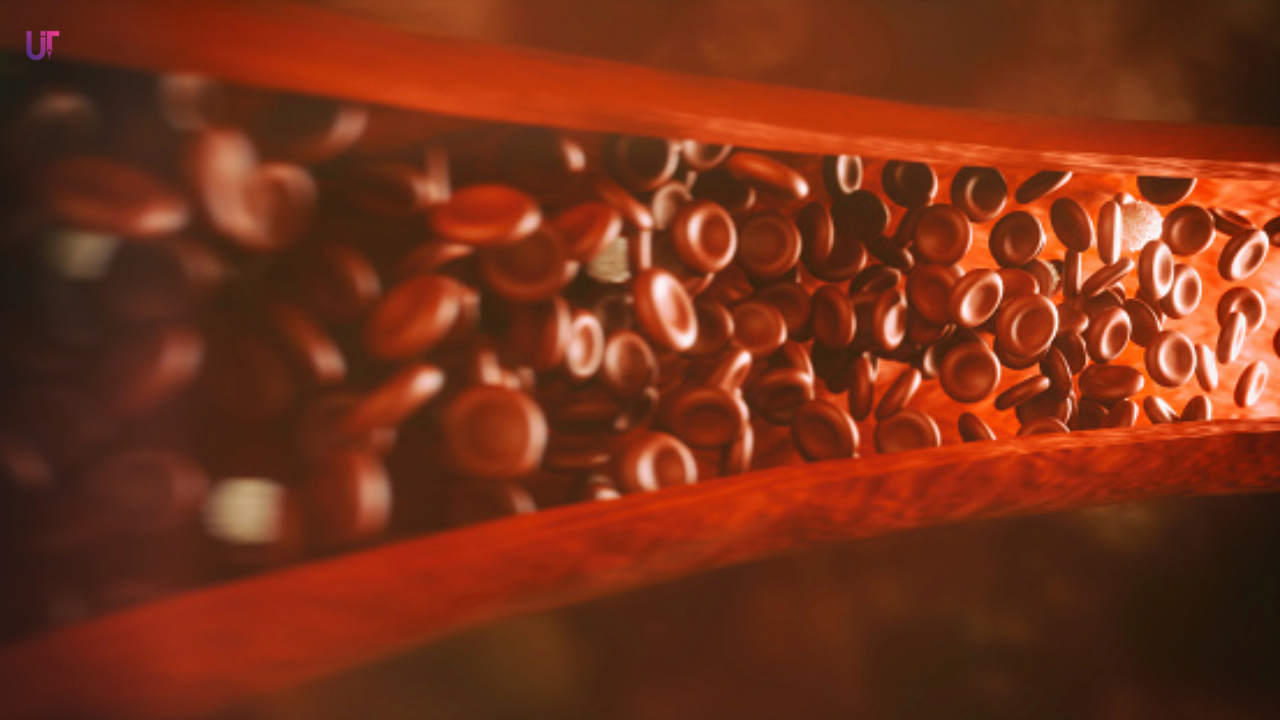
Laminar flow is the smooth, organized movement of blood in layers inside a vessel. Instead of swirling or mixing randomly, the blood glides forward in neat “sheets.” The layer at the center moves the fastest, while the layers closer to the vessel wall move slower because of friction. This creates a calm, silent flow pattern that allows blood to travel efficiently, with very little resistance or energy loss. It is the normal and preferred way blood moves through most vessels.
Start With This Picture: A Highway With Perfect Lanes
Imagine standing on an overhead bridge, watching a smooth expressway. Cars in the middle lanes move fastest. Cars near the edges move slower. No one is bumping into anyone. No zig-zagging. No horns. Just calm, straight motion.
That is laminar flow.
Inside your vessels, blood does exactly the same thing. It doesn’t move as a single block—it moves in layers, each layer sliding smoothly over the next.
The important part?
The middle moves fastest, the edges move slowest.
This single idea explains so many physiological mechanisms that students struggle with.
Why Are the Layers Different Speeds?
Because of friction.
The layer of blood touching the vessel wall experiences the most friction.
Just like the lane of cars closest to the shoulder must slow down because it’s tight and risky… blood touching the wall slows too.
The next layer above it moves a little faster.
The next one, faster still.
The center sits farthest from friction, so it moves the fastest.
So in laminar flow:
- Wall layer: slowest
- Middle layer: fastest
- Everything else forms smooth gradients in between
This creates a parabolic flow profile — but you don’t even need the math to understand it. The picture is enough.
Why Does Blood Prefer Laminar Flow?
Because the body is designed for efficiency, and laminar flow offers:
1. Low resistance
When layers glide smoothly, the vessel doesn’t waste energy pushing blood forward.
2. Silent flow
Laminar flow produces no turbulence, no vibrations, no murmurs.
3. Stable delivery
Oxygen, nutrients, and hormones reach tissues smoothly and predictably.
4. Protection
The smooth flow prevents unnecessary stress on vessel walls. Turbulence, on the other hand, can damage them.
Laminar flow is the body’s default. Turbulent flow only appears when something disturbs this balance.
A Simple Demonstration You’ve Seen Before
Have you watched cooking oil poured slowly into a bowl?
It flows in clean layers.
But pour it too fast—or stir the bowl—and it becomes chaotic.
That’s laminar vs turbulent flow at home.
Where Laminar Flow Happens in the Body
Laminar flow occurs in:
- Arteries (mostly)
- Arterioles
- Capillaries
- Veins
- Venules
As long as the flow is gentle, steady, and the vessel is smooth, laminar flow dominates.
But there are notable exceptions.
When Laminar Flow Breaks: Turbulence
If you increase speed too much, narrow a vessel, or alter its shape, the layers can no longer stay organized.
Think of a trailer overtaking too fast on a curve — chaos starts.
Turbulent flow happens when:
- Blood flow velocity is too high
- Vessel diameter suddenly changes
- There’s a narrowing (stenosis)
- Blood becomes less viscous (e.g., anemia)
- There are sharp turns (like at the aortic arch)
This is exactly why murmurs happen—turbulence creates sound.
Laminar flow is quiet. Turbulent flow is noisy.
Why Laminar Flow Is Crucial
It’s not just a physics concept; it explains many clinical and physiological processes.
1. Why white blood cells marginate
When flow slows in inflammation, the organized layers change.
RBCs migrate to the center.
WBCs drift to the edges.
Margination begins because laminar flow changes.
2. Why atherosclerosis forms at branch points
Laminar flow is protective.
Turbulent flow stresses vessel walls.
Branch points and curves often lose laminar flow — making them hotspots for plaque.
3. Why Reynolds number matters
Reynolds number is simply the formula that predicts when laminar flow will break into turbulence.
High Reynolds number = more chaos.
4. Why anemia patients can develop flow murmurs
Low viscosity disrupts layering.
Less friction = easier turbulence.
5. Why capillaries have perfect exchange
Laminar flow ensures predictable, gentle movement — ideal for gas and nutrient exchange.
The “River Analogy”
Picture a calm river.
At the center: smooth, fast water.
At the banks: slow, gentle movement.
Under the surface: layers sliding neatly.
That is laminar flow.
Now drop a rock or speed up the current. Suddenly you get swirls, noise, splashes — turbulence.
Your blood vessels work exactly the same.
The One-Sentence Summary
Laminar flow is the smooth, layered movement of blood where the center flows fastest and the edges slowest—allowing efficient, quiet, low-resistance circulation.