Hypoxic Pulmonary Vasoconstriction

Hypoxic Pulmonary Vasoconstriction

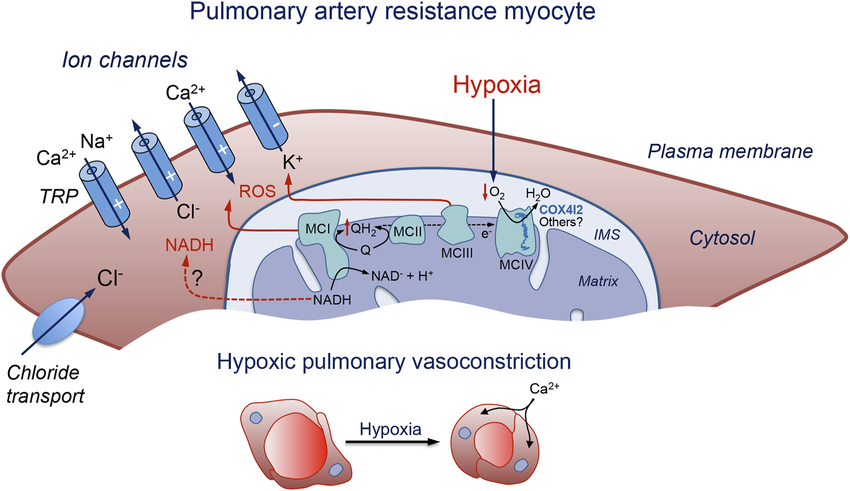
In most of the body, when tissues are low on oxygen, blood vessels open up (dilate) to bring more oxygen. But in the lungs, the opposite happens: low oxygen makes small arteries narrow (constrict). Why? Because the lung’s job is to match airflow (ventilation) with blood flow (perfusion). If one area of the lung isn’t getting air, it makes no sense to send blood there — that blood would leave still “blue” and waste circulation.
Ultrafiltration — A simplified Concept

Ultrafiltration — A simplified Concept

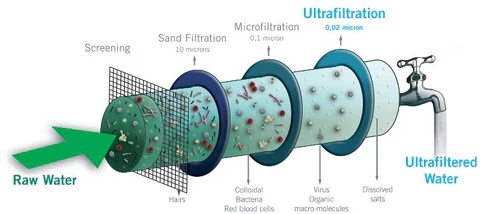
Fluid movement across a semipermeable membrane is driven by opposing forces: hydrostatic pressure (push) and oncotic pressure (pull due to proteins). The generalized Starling equation describes fluid flux (Jv): Jv = Kf × [ (Pc - Pi) - σ(πc - πi) ]
Wave Function (Ψ)

Wave Function (Ψ)

The wave function is a mathematical function — a set of numbers you can calculate — that tells us everything possible about a quantum system. Here’s the key: Ψ itself doesn’t directly give us a physical answer. Instead, when you take its absolute square (|Ψ|²), you get the probability of finding the particle at a particular place or in a particular state.
The Cardiac Cycle

The Cardiac Cycle

The cycle begins with the atria (the two upper chambers) filling with blood. On the right side, blood comes from the body through the superior and inferior vena cava. On the left side, blood arrives from the lungs via the pulmonary veins
Renin–Angiotensin–Aldosterone System (RAAS)

Renin–Angiotensin–Aldosterone System (RAAS)

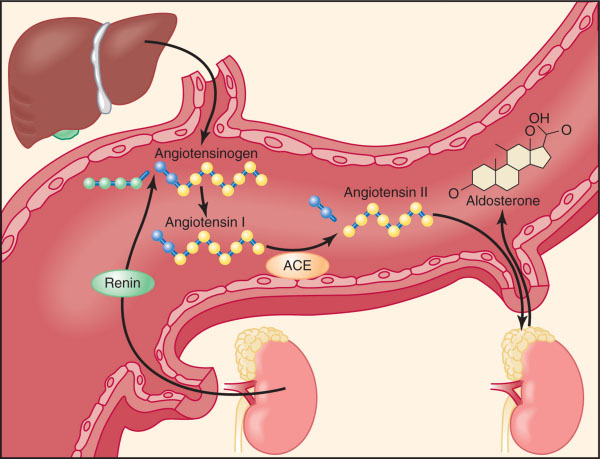
The JG cells detect crisis through three eyes: Baroreceptor eye → senses renal arterial pressure. Chemoreceptor eye (Macula densa) → monitors sodium chloride in distal tubule. Nerve eye → listens to sympathetic nerves releasing norepinephrine. When all scream “low!”, they release Renin. Note that Renin is not a hormone — it’s an enzyme. It cleaves angiotensinogen into action.
Hydrolysis

Hydrolysis

What If Water Could Act Like Molecular Scissors? Every time you digest food, clean with soap, or even cry, water is performing one of chemistry's most important tricks: breaking apart…