[KNOWLEDGE BREADCRUMB]: Home > Neuroscience > Cognitive Processes > Thought Formation
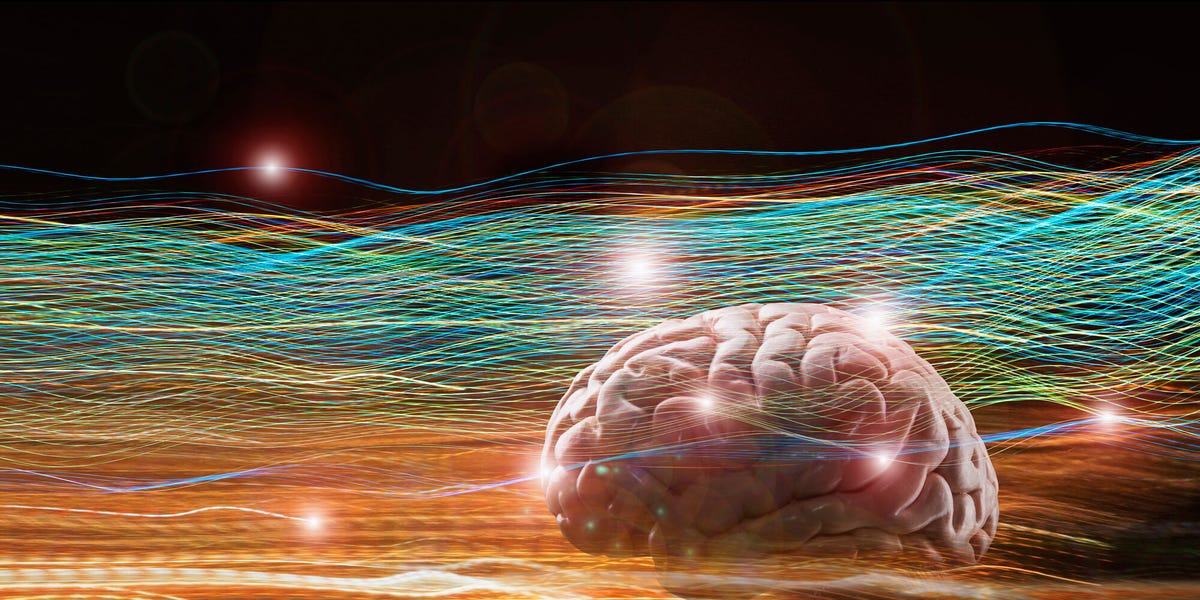
Close your eyes for five seconds and think about anything—a dog, the smell of coffee, your plans for tomorrow. In that brief moment, roughly 86 billion neurons just performed a coordinated electrical and chemical dance more complex than all the internet traffic on Earth. The question isn’t just what you thought—it’s how did silent, biological tissue become a living idea?
Welcome to the most astonishing transformation in the universe: the creation of thought.
Introduction
Exploring the Neural Landscape: From Synapses to Self-Awareness
For millennia, humans wondered where thoughts lived. The ancient Egyptians thought it was the heart. Aristotle agreed. It took centuries of curiosity—and some very brave anatomists—to prove that the three-pound organ in your skull is the source of all your dreams, fears, jokes, and decisions .
TIMELINE VISUALIZATION:
- Ancient Greece: Aristotle says heart is seat of intellect ❌
- 1500s: Leonardo da Vinci sketches brain ventricles (thinks thoughts are fluids) 🔍
- 1890s: Santiago Ramón y Cajal proves brain is made of individual cells (neurons) 🔬
- *2025*: We can watch thoughts form in real-time with imaging 🧠]
Today, we know that a thought isn’t a thing—it’s a process. It’s the temporary pattern of millions of neurons firing in precise sequences. Let’s walk through how that happens, from the microscopic whisper of a single cell to the symphony of consciousness.
The Cast of Characters – Neurons and Their World
1.1 The Brain’s Building Blocks
[CONCEPT CARD: NEURON]
What it is: A specialized cell designed to transmit information.
If you zoom into your brain right now (hypothetically, with a very powerful microscope), you’d see a forest of neurons. These aren’t just passive blobs; they’re dynamic little machines .
A neuron has three key parts:
- Dendrites: The “antennae.” They listen to neighboring neurons.
- Soma (Cell Body): The “processor.” It sums up all the signals.
- Axon: The “transmitter.” It sends the final signal out to others.
[VISUAL METAPHOR: THE TREE]
Think of a neuron as an upside-down tree.
- The roots (dendrites) catch signals from the soil (other neurons).
- The trunk (axon) carries the message down.
- The branches at the top (axon terminals) reach out to touch the roots of the next tree.
Fun Fact: If you lined up all the neurons in your brain end to end, they’d stretch from Earth to the Moon and back—twice.
1.2 The Spark: Electrical Beginnings
A thought begins as a disturbance. Imagine you touch a hot stove. Sensory receptors in your finger scream. This scream is electrical.
Normally, a neuron sits at rest, like a quiet battery (-70 millivolts). When stimulated, channels on its membrane snap open. Charged particles (ions) rush in. The battery suddenly surges to +40 millivolts. This is called an action potential—the fundamental unit of a thought .
[EXPLAINER ILLUSTRATION:
- Resting: Neuron at -70mV (calm)
- Stimulus: Gates open, sodium rushes in
- Firing: Spike reaches +40mV (message sent)
- Recovery: Potassium rushes out, resets to -70mV]
This electrical pulse zips down the axon at speeds up to 120 meters per second. But here’s the magic trick: neurons don’t actually touch.
The Conversation – Synapses and Signaling
2.1 The Synaptic Gap
[CONCEPT CARD: SYNAPSE]
What it is: The microscopic gap between two neurons where information jumps from one cell to another.
When the electrical signal reaches the end of the axon, it hits a roadblock: empty space. This is the synaptic cleft.
[Picture This: TWO PEOPLE ON OPPOSITE ROOFTOPS]
You can’t jump across (it’s too far), but you can throw a ball. In the brain, the “balls” are neurotransmitters—chemical messengers.
2.2 The Chemical Mail Service
Here’s the step-by-step of how two neurons “talk”:
- The Arrival: The electrical pulse reaches the terminal.
- The Release: It triggers tiny bubbles (vesicles) filled with chemicals to merge with the cell wall and dump their contents into the gap .
- The Crossing: The chemicals float across the synapse.
- The Landing: They dock onto receptors on the next neuron’s dendrites, like a key fitting into a lock.
- The Decision: If enough “keys” land, the second neuron fires its own electrical pulse.
[DID YOU KNOW?]
Your brain has trillions of synapses. If you counted one synapse per second, it would take you over 30,000 years to finish counting.
This process is where your individuality lies. The strength of these connections, the types of chemicals released, and the number of receptors waiting determine how you think, feel, and react.
Writing the Story – Memory Formation
So, you have a signal. You have a conversation. But how does that become a memory? How does a fleeting thought become a permanent part of you?
3.1 The Hebbian Theory
In 1949, psychologist Donald Hebb proposed a simple but revolutionary idea, often paraphrased as:
“Neurons that fire together, wire together.”
CONCEPT EVOLUTION TIMELINE:
- 1949: Hebb proposes his theory (theoretical)
- 1973: Bliss & Lomo discover Long-Term Potentiation (LTP) in rabbits (biological proof)
- 2024: Scientists map synaptic changes during learning in real-time (visual confirmation)]
When two neurons fire at the exact same time repeatedly, something physical happens. The synapse between them gets stronger. The “listening” neuron grows more receptors, making it easier to catch the chemical “balls” next time .
3.2 Short-Term vs. Long-Term Memory
[COMPARATIVE TABLE: MEMORY TYPES]
| Feature | Working Memory (Short-Term) | Long-Term Memory |
|---|---|---|
| Analogy | A sticky note | A library bookshelf |
| Duration | Seconds to minutes | Days to a lifetime |
| Capacity | Limited (7±2 items) | Vast (practically unlimited) |
| Mechanism | Ongoing electrical firing | Physical structural changes (synapses) |
How does a sticky note become a book? Through consolidation. This is the process of stabilizing a memory trace. It involves strengthening those synaptic connections, sometimes growing entirely new spines on dendrites to make the connection permanent .
3.3 The Role of the Hippocampus
[RELATED CONCEPTS PANEL]
- Hippocampus: The brain’s “librarian.” It organizes and indexes memories.
- Cortex: The “bookshelves.” Where memories are finally stored.
- Amygdala: The “highlighter.” Adds emotional significance (why you remember your first kiss but not what you ate for breakfast last Tuesday).
The hippocampus takes the information from your working memory and “teaches” it to the cortex over time. This is why old memories (like your childhood home) can survive hippocampal damage, but you might not be able to form new memories .
The Night Shift – Sleep and Dreams
[CURIOSITY PROMPT: “YOU MIGHT ALSO WONDER…”]
Why do we spend a third of our lives unconscious? If evolution is so smart, why would it leave us vulnerable for 8 hours a day?
Because sleep isn’t downtime. It’s maintenance time.
4.1 Memory Replay
Remember that thing you learned today—the guitar chord, the chemistry formula? While you sleep, your brain plays it back. Literally.
Researchers have observed that the same patterns of neurons that fired while a rat ran a maze during the day will fire again in the exact same sequence while the rat sleeps . This “replay” happens during NREM (Non-Rapid Eye Movement) sleep.
4.2 REM and the Weirdness of Dreams
[CONCEPT CARD: ADULT-BORN NEURONS (ABNs)]
Hover Definition: New neurons generated in the hippocampus even in adulthood, contrary to old beliefs that we’re born with all the neurons we’ll ever have.
During REM (Rapid Eye Movement) sleep—when you have your strangest dreams—something specific happens. Recent research from the University of Tsukuba shows that specific “adult-born neurons” in the hippocampus are activated. These young neurons are responsible for consolidating memories. If scientists silence these neurons during REM sleep, the memories don’t stick .
[DID YOU KNOW?]
Your brain is more active during REM sleep than when you’re awake doing math problems.
So, what is a dream? It might be the cortex’s best attempt to make sense of the chaotic signals it’s receiving while the hippocampus is busy replaying and filing the day’s events. It’s the echoes of the night shift at work .
4.3 Synaptic Homeostasis
There’s another theory: Sleep “prunes” your connections. Throughout the day, your synapses get stronger and noisier. Sleep scales them down—not too much, but just enough to restore the signal-to-noise ratio, making you ready to learn again tomorrow .
The Rewiring – Neuroplasticity
For decades, scientists thought the adult brain was fixed—like concrete. If you damaged it, you lost it. If you didn’t learn something as a kid, you never would.
That was wrong.
[CONCEPT CARD: NEUROPLASTICITY]
What it is: The brain’s ability to reorganize itself by forming new neural connections throughout life.
5.1 The Plastic Paradox
Neuroplasticity is a double-edged sword .
- Adaptive Plasticity (The Good): Learning a new language, recovering from a stroke, mastering the piano. Your brain physically changes to accommodate the skill. London taxi drivers, who memorize “The Knowledge” (thousands of streets), have larger hippocampi than average .
- Maladaptive Plasticity (The Bad): Chronic pain, addiction, phantom limb syndrome. The brain “learns” to be in pain or to crave a substance, and it physically rewires to support that pathology.
5.2 Mechanisms of Change
How does plasticity happen on a physical level?
- Synaptic Plasticity: Strengthening or weakening existing synapses (LTP/LTD) .
- Structural Plasticity: Dendrites grow new spines. Axons sprout new terminals. It’s like your brain growing new leaves .
- Neurogenesis: The birth of new neurons. Yes, even in adults, the hippocampus can generate new neurons .
[VISUAL SUMMARY: THE PLASTICITY SPECTRUM]
- Seconds: Synaptic strength adjusts (Learning a fact)
- Days: Dendritic spines grow (Learning a skill)
- Months: Cortical maps shift (Recovery from injury)
- Lifetime: Structural remodeling (Aging, adaptation)
5.3 Harnessing Your Plasticity
[YOU MIGHT ALSO WONDER…]
Can I control my own brain’s rewiring?
Yes. This is the basis of cognitive behavioral therapy, mindfulness, and deliberate practice. Every time you focus your attention, you are selecting which circuits get strengthened and which get weakened . The brain is like a field: water the plants you want to grow.
The Big Picture – A Symphony, Not a Solo
So, how does the brain create thoughts?
- You have a network of neurons (Part 1).
- They communicate via electrical sparks and chemical synapses (Part 2).
- Repeated firing creates structural memories (Part 3).
- Those memories are sorted and strengthened during sleep (Part 4).
- And your entire life, your brain is physically reshaping itself through neuroplasticity (Part 5).
[CONCEPT WEB / ECOSYSTEM MAP]
text
                    ┌─────────────────┐
                    │   NEURON (Cell) │
                    │   The Hardware  │
                    └────────┬────────┘
                             │
                             ▼
                    ┌─────────────────┐
                    │   SYNAPSE       │
                    │   Communication │
                    └────────┬────────┘
                             │
         ┌───────────────────┼───────────────────┐
         ▼                   ▼                   ▼
┌─────────────────┐  ┌─────────────────┐  ┌─────────────────┐
│ MEMORY FORMATION│  │   SLEEP & DREAMS│  │NEUROPLASTICITY  │
│ (LTP / Engrams) │  │(Consolidation)  │  │ (Rewiring)      │
└─────────────────┘  └─────────────────┘  └─────────────────┘
         └───────────────────┬───────────────────┘
                             ▼
                    ┌─────────────────┐
                    │    THOUGHT      │
                    │  The Emergent   │
                    │   Experience    │
                    └─────────────────┘
Thought is the emergent property of this system. It’s not located in one place, like a specific molecule. It’s the pattern—the music played by the orchestra, not the individual instruments.
Summary Panel: The Spark of You
- The Unit: Neurons are the cells. They speak a language of electricity and chemistry.
- The Message: Thoughts are patterns of neural firing across billions of cells.
- The Memory: When neurons fire together repeatedly, they wire together physically (synaptic plasticity).
- The Maintenance: Sleep is when the brain consolidates memories, replays the day’s events, and clears out noise.
- The Lifelong Power: Neuroplasticity means you are not stuck with the brain you have today; you are actively building the brain you will have tomorrow.
Continue Exploring Pathways
[INTERACTIVE KNOWLEDGE MAP]
If you found this interesting, your next stops in the Utopedia should be:
- For the Tech Lover: 🖥️ [Brain-Computer Interfaces] → How we are learning to read these signals and control machines with thought.
- For the Psychologist: 🧠 [Cognitive Biases] → How the structure of memory leads to systematic errors in thinking.
- For the Biologist: 🔬 [Neurotransmitters] → Deep dive into dopamine, serotonin, and the chemicals that color your mood.
- For the Philosopher: 🤔 [Consciousness] → If thoughts are just neural firing, what is “awareness”?
- For the Futurist: 🚀 [Neuroplasticity & AI] → How artificial neural networks mimic (and differ from) your brain’s plasticity .
Scientific Debates & Unresolved Questions
Even with all this, we’re still just scratching the surface.
[DEBATE CARD: THE BINDING PROBLEM]
How does the brain bind all these separate inputs—color, sound, smell, emotion—into one unified experience? When you see a red ball bounce, the color “red” is processed in one area, motion in another, shape in another. How does it all come together seamlessly?
[DEBATE CARD: THE HARD PROBLEM]
Why is there subjective experience? Why does processed information feel like something? We can explain how neurons fire, but we can’t explain why that firing is accompanied by the feeling of “redness” or “pain.” This is the “Hard Problem of Consciousness.”
Your Learning Journey
[BEGINNER PATH]: Start with Neurons → then Synapses → then Memory. This builds the foundation brick by brick.
[ADVANCED PATH]: Explore Neuroplasticity mechanisms → Metaplasticity → Synaptic Consolidation Theories → Computational Neuroscience .
[CROSS-DISCIPLINARY CONNECTION]
- Physics: The action potential relies on the movement of charged ions (electrochemistry).
- Computer Science: Neural networks in AI are (very) rough models of the synaptic connections in your brain .
- Education: Understanding neuroplasticity proves that “study” literally changes the physical structure of a student’s brain.
Test Your Understanding (Quick Quiz)
- What is the name of the gap between two neurons?
- Answer: Synapse
- What does “neurons that fire together, wire together” mean?
- Answer: Repeated simultaneous activation strengthens the synaptic connection.
- True or False: Adult brains cannot grow new neurons.
Join the Exploration
Thank you for diving into the neural landscape with us here at Utopedia. Your brain just physically changed by reading this—new synapses have formed, old ones have strengthened. You are literally not the same person who started this article.
We hope this simplified explanation sparked your curiosity and made you feel at home in the library of knowledge.
- 💬 Your Feedback Matters: Was this helpful? Too simple? Too complex? Drop a comment on this article to help us improve the next one!
- 📢 Join the Community: Love learning? Connect with fellow curious minds. Students, don’t miss out—join the Campus Network channel on Telegram for updates, discussions, and exclusive content.
Keep asking “how” and “why.” The universe is vast, but so is your capacity to understand it.
[NEXT CONCEPT TO LEARN SUGGESTION]: “How Emotions Are Made: The Neuroscience of Feeling”