1. Introduction: More Than Just an Equation
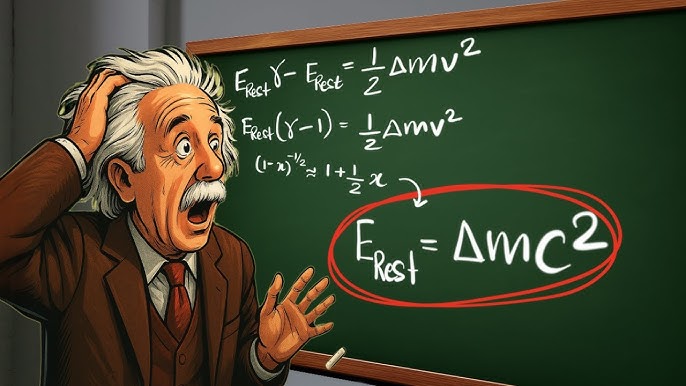
Albert Einstein’s E=mc2 is the most famous equation in history. It has been printed on t-shirts, featured in films, and used as a shorthand for scientific genius. Yet, its profound meaning is often obscured by its simplicity. The equation is not merely a recipe for a nuclear bomb, nor is it an abstract piece of mathematics. It is a revolutionary statement about the fundamental fabric of reality, revealing a deep and elegant unity between two concepts once thought to be entirely separate: mass and energy.
This article aims to provide a well-grounded, in-depth exploration of E=mc2. We will journey from the meaning of its symbols to the historical context of its discovery, through its rigorous derivation, and finally to its myriad applications—from the cores of stars to the smallest particles that make up your own body.
2. What E, m, and c Really Mean
Before diving into the physics, we must understand the language. The equation is compact, but each symbol carries a universe of meaning.
- E (Energy): In physics, energy is the currency of change. It is the capacity to do work or produce heat. It comes in many forms: kinetic energy (the energy of motion), thermal energy (the energy of vibrating molecules), chemical energy (stored in the bonds between atoms), and radiant energy (light). In E=mc2, E represents the total energy of an object when it is at rest—its “rest energy.”
- m (Mass): Mass is often confused with weight, but they are different. Weight is the force of gravity on an object. Mass is a more fundamental property. It is a measure of an object’s resistance to acceleration (inertia) and its gravitational attraction to other objects. In classical physics, mass is a constant, an unchanging property of an object. E=mc2 shatters this view, revealing mass as a dynamic form of stored energy.
- c (The Speed of Light): This is a universal constant, denoted by c, which is the speed at which all light and other electromagnetic radiation travels in a perfect vacuum. Its value is 299,792,458 meters per second (approximately 186,282 miles per second). In our everyday experience, this number is unimaginably large. Its role in the equation is that of a conversion factor. However, it appears as c2, which is an astronomical number: roughly 9×10¹⁶m2/s2. This enormous factor is the key to the equation’s power. It tells us that a very small amount of mass is equivalent to a truly colossal amount of energy.
Visualizing the Scale: Imagine a single grain of sand, with a mass of about one-thousandth of a gram. According to E=mc2, its rest energy is equivalent to the energy released by burning 300 kilograms of coal.
3. Rest Energy and Equivalence
The equation is often interpreted in two complementary ways, both of which are correct and crucial for understanding its full scope.
- Mass is a measure of energy content. This is the most direct reading. Any object with mass, simply by existing, possesses a vast, latent reservoir of energy. This is its “rest energy.” It is the energy inherent in its very being.
- All forms of energy have mass. This is the converse, and perhaps even more radical, implication. If a system gains energy in any form (it is heated, accelerated, or its chemical bonds are strengthened), its mass increases by a correspondingly tiny amount, given by Δm=ΔE/c2. Conversely, if a system loses energy (by cooling down or emitting light), its mass decreases. Mass and energy are not two separate entities but two different aspects of the same underlying “stuff,” which physicists call mass-energy. The separate laws of “conservation of mass” and “conservation of energy” in classical physics are merged into a single, more profound law: the conservation of mass-energy.
4. From Speculation to Certainty
The idea of a connection between mass and energy did not spring fully formed from Einstein’s mind in 1905. It was the culmination of decades of scientific speculation, but it was Einstein who, through the lens of his new theory of relativity, gave it a universal and rigorous foundation.
Pre-Einsteinian Clues
In the late 19th century, physicists were grappling with the nature of light and electromagnetism.
- J.J. Thomson (1881): The discoverer of the electron showed that a charged sphere in motion behaves as if it has extra mass due to the energy stored in its electric field. This hinted that energy might have an inertial effect.
- Henri Poincaré (1900): The great French mathematician suggested that electromagnetic radiation, like light, should possess a “fictitious mass” equal to its energy divided by c2.
- Friedrich Hasenöhrl (1904): An Austrian physicist calculated that radiation trapped in a reflecting cavity would increase the cavity’s inertia, deriving a formula similar to E=mc2, though with a numerical factor of 3/8, which was later corrected.
These were important clues, but they were specific to electromagnetic energy. They lacked a general, first-principles derivation.
Einstein’s 1905 Thought Experiment
In his famous paper, “Does the Inertia of a Body Depend Upon Its Energy Content?”, Einstein used a brilliant thought experiment (a Gedankenexperiment) that relied on the two postulates of his new special theory of relativity:
- The laws of physics are the same for all observers moving at a constant velocity.
- The speed of light is constant for all such observers.
Here is a step-by-step breakdown of his argument:
- The Setup: Imagine a body at rest, say a box, that has a certain mass and a certain total energy. This box emits two identical pulses of light, of equal energy, in exactly opposite directions.
- Symmetry is Key: Because the light pulses are emitted symmetrically, the box remains at rest. Its velocity does not change. However, its total energy has decreased by the amount of energy carried away by the light.
- Changing Perspective: Now, imagine the exact same process, but viewed by an observer who is moving at a constant velocity relative to the box. From this observer’s perspective, the box is moving. It possesses kinetic energy.
- Relativistic Effects: The moving observer measures the energy of the light pulses differently. Due to the relativistic Doppler effect (a shift in frequency/wavelength of waves from a moving source), the forward-going light pulse has more energy and the backward-going one has less energy than they would for an observer at rest with the box.
- The Crucial Comparison: Einstein then carefully compared the total energy of the box (including its kinetic energy) before and after the emission, from the perspective of both the stationary and the moving observer.
- The Inevitable Conclusion: For the laws of physics to be the same for both observers (as required by relativity), the only way to balance the energy books was for the mass of the box to have changed. The box’s mass must have decreased by an amount exactly proportional to the energy of the light it emitted.
Einstein derived that the loss of mass (Δm) was equal to the energy emitted (EL) divided by the square of the speed of light. He then made a bold leap, stating that if this were true for light energy, it must be true for any form of energy. He concluded his paper with the famous line: “If the theory corresponds to the facts, radiation conveys inertia between the emitting and absorbing bodies.”
The Role of Max Laue and the First Rigorous Proof
While Einstein’s physical insight was profound, his 1905 derivation was not mathematically rigorous by modern standards. He had made certain approximations valid only for low velocities. It was the German physicist Max von Laue in 1911 who provided the first completely general proof of E=mc2 for all physical systems, using the mathematical framework of relativity. The proof was further generalized by Felix Klein in 1918. This in no way diminishes Einstein’s achievement; he was the one who identified the principle itself.
5. Applications Across the Universe
The principle of mass-energy equivalence is not an abstract curiosity; it is the engine that powers the universe and the key to understanding the structure of matter.
The Atomic Nucleus: Binding Energy and Mass Defect
The most dramatic demonstration of E=mc2 occurs inside the atom’s nucleus. Protons and neutrons (collectively called nucleons) are held together by an incredibly powerful force called the strong nuclear force. This force must overcome the immense electrical repulsion between the positively charged protons.
The energy that holds the nucleus together is called binding energy. According to E=mc2, this energy has mass. Therefore, the mass of a stable nucleus is always less than the sum of the masses of its individual, free protons and neutrons.
Visualizing the Concept: Imagine a ball rolling into a deep hole. To get it out, you must add energy. The ball at the bottom of the hole has less potential energy than a ball at the top. Similarly, the nucleus is at the “bottom of a hole” created by the strong force. The “missing” energy is the binding energy, and its mass equivalent is the “missing” mass.
This difference is called the mass defect. When you weigh a nucleus, you are weighing it minus the mass of its binding energy. This is the source of power for both nuclear fission and fusion.
Powering the Stars: Nuclear Fusion
In the core of our Sun, immense gravitational pressure and temperatures of about 15 million degrees Celsius force hydrogen nuclei (protons) to fuse together, ultimately forming helium.
The mass of one helium nucleus is about 0.7% less than the mass of the four protons that created it. This 0.7% of mass has been converted into energy via E=mc2.
The Calculation:
- Mass of 4 protons: 6.690×10⁻²⁷ kg
- Mass of 1 helium nucleus: 6.643×10⁻²⁷ kg
- Mass defect (Δm): 0.047×10⁻²⁷ kg
- Energy released per reaction (E=Δmc2): approximately 4.2×10⁻¹² joules.
This tiny amount per reaction is multiplied by the staggering number of reactions occurring in the Sun’s core every second (about 1038). This is the source of the Sun’s radiant energy, which has sustained life on Earth for billions of years.
Harnessing the Nucleus: Fission and its Consequences
Nuclear fission is the opposite process: a very heavy nucleus, like uranium-235, is split into two medium-sized nuclei after absorbing a neutron. The combined mass of the two product nuclei is less than the mass of the original uranium nucleus plus the neutron. This missing mass is converted into energy, which manifests as the kinetic energy of the fission fragments and released neutrons, as well as gamma radiation.
This is the principle behind nuclear power plants, where this released energy is used to generate heat, create steam, and turn turbines to produce electricity. It is also the principle behind atomic bombs, where an uncontrolled chain reaction releases this energy in a devastating explosion.
The Ultimate Conversion: Matter-Antimatter Annihilation
The purest and most complete expression of E=mc2 is the annihilation of matter and antimatter. Antimatter particles are identical to their matter counterparts but have opposite charge. When a particle (like an electron) meets its antiparticle (a positron), they cease to exist as mass. Their entire rest mass is converted into pure energy in the form of two high-energy gamma-ray photons. This is a 100% efficient conversion of mass into energy, the most energetic reaction known. This principle is harnessed in hospitals for PET (Positron Emission Tomography) scans, where a radioactive tracer emits positrons that annihilate with electrons in the body, allowing doctors to create detailed 3D images of metabolic processes.
The Mass of You: Chemical Energy and the Proton’s Secret
The principle applies to all forms of energy, not just nuclear. When a piece of wood burns, chemical energy is released. The resulting ash and smoke have a slightly lower total mass than the original wood and oxygen. The change is minuscule and impossible to measure with any scale, but it is real.
More profoundly, E=mc2 explains where most of the mass of ordinary matter comes from. A proton, for example, is not a fundamental particle. It is made of two “up” quarks and one “down” quark, held together by the strong force, which is mediated by particles called gluons. The quarks themselves have a tiny amount of “intrinsic” mass. However, the vast majority of a proton’s mass—over 99%—comes from the kinetic energy of the quarks whizzing around inside and, most importantly, from the energy of the strong force field (the gluons) that binds them together. As physicist John Wheeler famously said, “Mass is frozen energy.”
6. Modern Scientific Applications
Today, E=mc2 is a standard tool used by physicists every day.
- Particle Accelerators: In machines like the Large Hadron Collider at CERN, protons are accelerated to 99.999999% the speed of light, giving them enormous kinetic energy. When these high-energy protons collide, their kinetic energy is converted into mass, creating new, heavier particles. This is how the Higgs boson and other exotic particles were discovered. The equation E=mc2 is used to calculate the mass of these newly created particles from the energy of the collision.
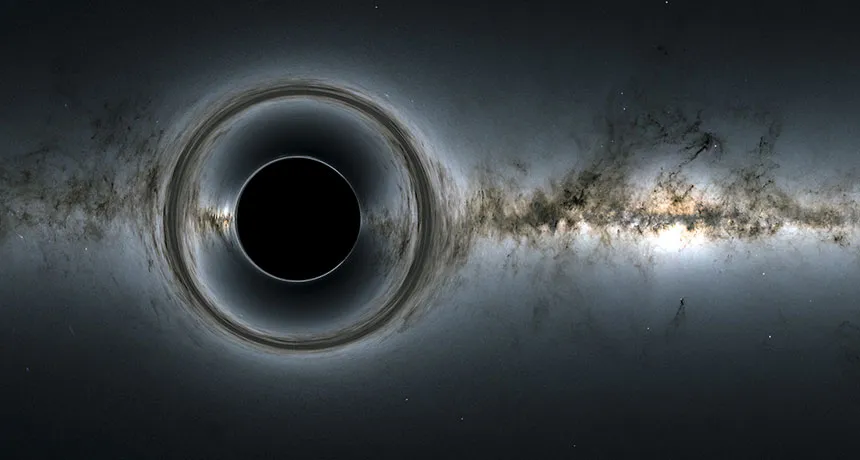
- Astrophysics and Cosmology: The equation explains the immense gravity of neutron stars and black holes. It is central to our understanding of the early universe, when it was so hot that energy could spontaneously condense into matter and antimatter particles. It also explains how stars evolve and die, fusing elements up to iron in their cores.
7. The Unity of the Cosmos
E=mc2 is far more than a historical artifact or a symbol of destruction. It is a cornerstone of modern physics, a profound statement about the fundamental unity of the physical world. It reveals that mass is not an intrinsic, unchangeable property of matter, but a condition—a frozen, concentrated form of energy. From the heat of the sun to the structure of the atom, from the creation of particles in giant accelerators to the mass of your own body, Einstein’s simple, elegant equation provides the unifying explanation. It stands as a timeless testament to the power of human reason to uncover the deep, elegant, and sometimes startling laws that govern the cosmos.
8. Further Reading
- Einstein, A. (1905). “Ist die Trägheit eines Körpers von seinem Energieinhalt abhängig?” (Does the Inertia of a Body Depend Upon Its Energy Content?). Annalen der Physik.
- Bodanis, D. (2000). E=mc2E=mc2: A Biography of the World’s Most Famous Equation. Walker Books. (An accessible and engaging history).
- Greene, B. (2004). The Fabric of the Cosmos: Space, Time, and the Texture of Reality. Alfred A. Knopf. (Excellent for understanding relativity in a modern context).
- Feynman, R. P., Leighton, R. B., & Sands, M. (1963). The Feynman Lectures on Physics, Vol. I. Addison-Wesley. (A classic, rigorous, and insightful treatment).