(A Utopedia Encyclopedia Entry)
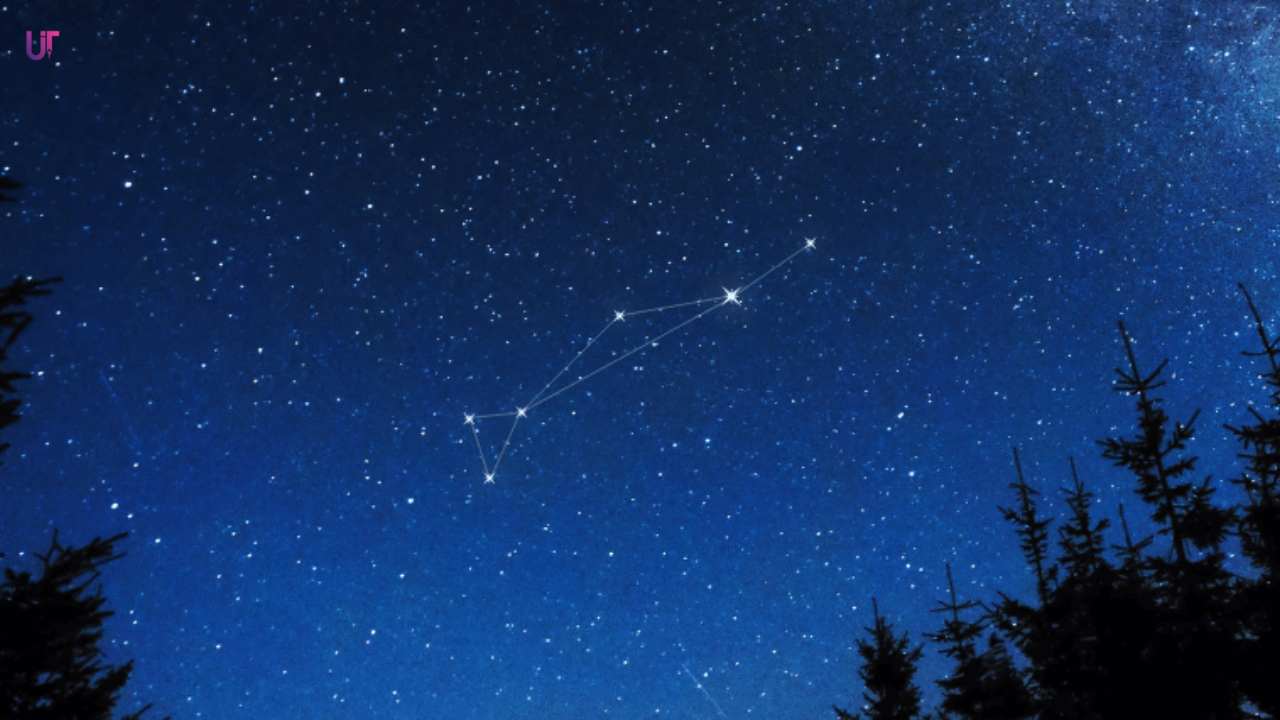
When you look up at the night sky, the constellations you see often have stories, myths, or navigational importance. One of the lesser-known but fascinating constellations is Dorado, a southern sky constellation that seems to swim across the heavens like a golden swordfish. Its name comes from the Spanish word dorado, meaning “golden.”
Though it is faint and invisible to most Northern Hemisphere observers, Dorado holds some of the most intriguing astronomical objects, including the Large Magellanic Cloud, a galaxy that has fascinated astronomers for centuries.
Location and Visibility
Dorado is a southern constellation, best visible from latitudes +20° to -90°, meaning it is primarily seen in the Southern Hemisphere. The constellation is positioned near Tucana, Hydrus, and Reticulum.
It is not very bright — its brightest star, Alpha Doradus, shines at just 3.3 magnitude, making it dim compared to northern stars like Sirius or Vega. However, its placement near the Large Magellanic Cloud (LMC) gives it astronomical significance far beyond its apparent faintness.
For stargazers in Australia, South America, or southern Africa, Dorado rises beautifully in the southern summer skies, offering a window into deep-sky wonders that are hidden from northern observers.
Mythology and Naming
Unlike many ancient constellations tied to Greek and Roman myths, Dorado is a modern constellation, introduced in the late 16th century by Dutch navigators exploring the Southern Hemisphere.
Its name, “Dorado” or “golden,” refers to the golden fish, possibly the dolphinfish (also called mahi-mahi), popular among sailors in the South Seas. The constellation symbolizes the exotic seas of the southern oceans, blending the worlds of exploration, navigation, and imagination.
Notable Stars in Dorado
Though Dorado is faint, it contains several stars worth noting:
- Alpha Doradus: The brightest star in the constellation, a white giant about 200 light-years away.
- Beta Doradus: A famous Cepheid variable star, whose brightness fluctuates over a predictable period. Cepheids are crucial for measuring distances in the universe — they are like cosmic rulers.
- Gamma Doradus: A star used as a prototype for a class of variable stars that pulsate in complex patterns, helping astronomers understand stellar interiors.
These stars might seem modest, but they play key roles in modern astronomy.
Deep-Sky Objects: The Large Magellanic Cloud
The jewel of Dorado is the Large Magellanic Cloud (LMC), a satellite galaxy of the Milky Way, visible as a hazy patch in the constellation.
The LMC is about 163,000 light-years away and contains billions of stars. It’s home to famous nebulae like the Tarantula Nebula, a massive star-forming region. For astronomers, the LMC provides an accessible laboratory to study stellar evolution, supernovae, and galactic dynamics.
Interestingly, the LMC is also a target for supernova observations. SN 1987A, the closest observed supernova in modern times, occurred in this galaxy, giving scientists an unprecedented opportunity to study how stars explode.
Dorado’s significance lies not in its individual stars but in hosting these incredible deep-sky objects.
Why Dorado Matters in Astronomy
- Distance Measurement: Cepheid variable stars in Dorado help refine the cosmic distance ladder. By measuring their brightness variations, astronomers can estimate distances to faraway galaxies.
- Star Formation: The Large Magellanic Cloud contains some of the most active star-forming regions near us, helping us understand how stars and planets are born.
- Supernova Research: Observing supernovae in Dorado allows scientists to test models of stellar death and chemical enrichment of galaxies.
So even though Dorado is faint to the naked eye, it is a powerhouse for scientific discovery.
Observing Dorado Today
To spot Dorado, stargazers need dark southern skies, away from city lights. The constellation is best seen from December to March, when it is highest in the sky.
Binoculars or a small telescope will reveal some of its brighter stars, but deep-sky objects like the LMC are visible even with the naked eye under dark conditions. For astrophotographers, Dorado offers striking compositions, especially when including the LMC and its nebulae.
In Simple Terms…
Dorado is a constellation of subtle beauty — not a sparkling jewel like Orion, but a gateway to the wonders of the southern sky. Its stars may be faint, but its galaxy, the Large Magellanic Cloud, shines as a cosmic playground for astronomers.
Think of Dorado as the quiet fish in a cosmic ocean, guiding scientists to explore the depths of galaxies, star formation, and the birth and death of stars. It reminds us that sometimes the most important treasures are hidden, waiting for curiosity to uncover them.
Key Facts Recap
- Constellation: Dorado (the golden fish or swordfish)
- Hemisphere: Southern
- Brightest Star: Alpha Doradus (3.3 magnitude)
- Notable Deep-Sky Object: Large Magellanic Cloud (LMC)
- Scientific Importance: Cepheid variables, star formation, supernova studies