(A Utopedia Note)
If the universe were a city, red dwarfs would be its quiet, tireless workers — small, humble, and often overlooked, yet forming the majority of its population. These tiny stars don’t grab headlines like massive blue giants or dazzling supernovae. Instead, they live long, steady lives — burning their fuel so slowly that they might outlive the universe itself.
Let’s journey into the fascinating world of red dwarfs — the most common, yet most mysterious stars in the cosmos.
What exactly is a Red Dwarf?
A red dwarf is a small, relatively cool star that shines with a dim red light. In terms of size, it’s only about 7% to 50% the mass of our Sun. That means if our Sun were a basketball, a red dwarf might be the size of a golf ball.
Their “red” color comes from their cool surface temperatures — usually around 2,000 to 4,000°C (compared to the Sun’s 5,500°C). Because they’re cooler, they emit less energy and appear reddish-orange rather than bright yellow or white.
Despite their dim glow, red dwarfs make up about 75% of all stars in our galaxy, the Milky Way. Yet, not a single one is visible to the naked eye from Earth. They’re simply too faint.
The Physics of a Slow Burn
The secret to a red dwarf’s long life lies in how it burns hydrogen.
In larger stars like the Sun, the pressure and temperature in the core are so intense that hydrogen fusion happens rapidly — hydrogen atoms combine to form helium, releasing huge amounts of energy. But in red dwarfs, the smaller mass means less pressure and temperature, so fusion happens slowly and efficiently.
They also have full convection, which means their material mixes continuously from the core to the surface. Think of it like a pot of soup constantly being stirred — no part burns out prematurely.
Because of this, red dwarfs use nearly all their hydrogen fuel, unlike the Sun, which can only use the hydrogen in its core. As a result, while our Sun will live for about 10 billion years, red dwarfs can burn steadily for trillions of years — longer than the current age of the universe!
In other words, no red dwarf has ever died naturally since the beginning of time. Every single one that ever formed is still shining somewhere out there.
Life Around a Red Dwarf: A Fragile Balance
Here’s where things get fascinating — could life exist around a red dwarf?
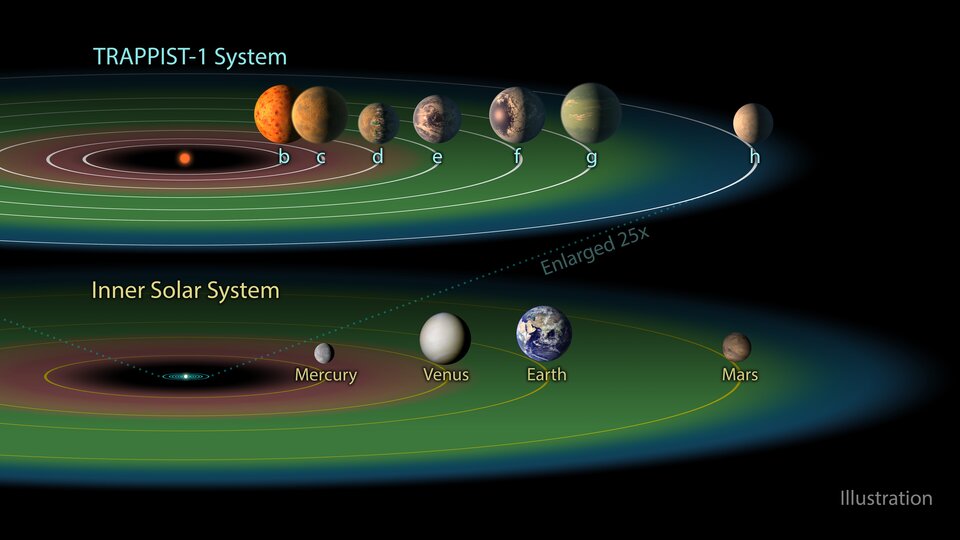
Because red dwarfs are dim, their habitable zone (the region where liquid water could exist on a planet’s surface) is very close to the star — maybe just a few million kilometers away.
That means a planet in this zone would have a “year” lasting just a few days or weeks, and it might be tidally locked — with one side always facing the star (permanent day) and the other side in eternal night.
Imagine living on a world where the sun never sets — one half boiling, the other frozen, with a narrow “twilight zone” in between where temperatures could be just right for life.
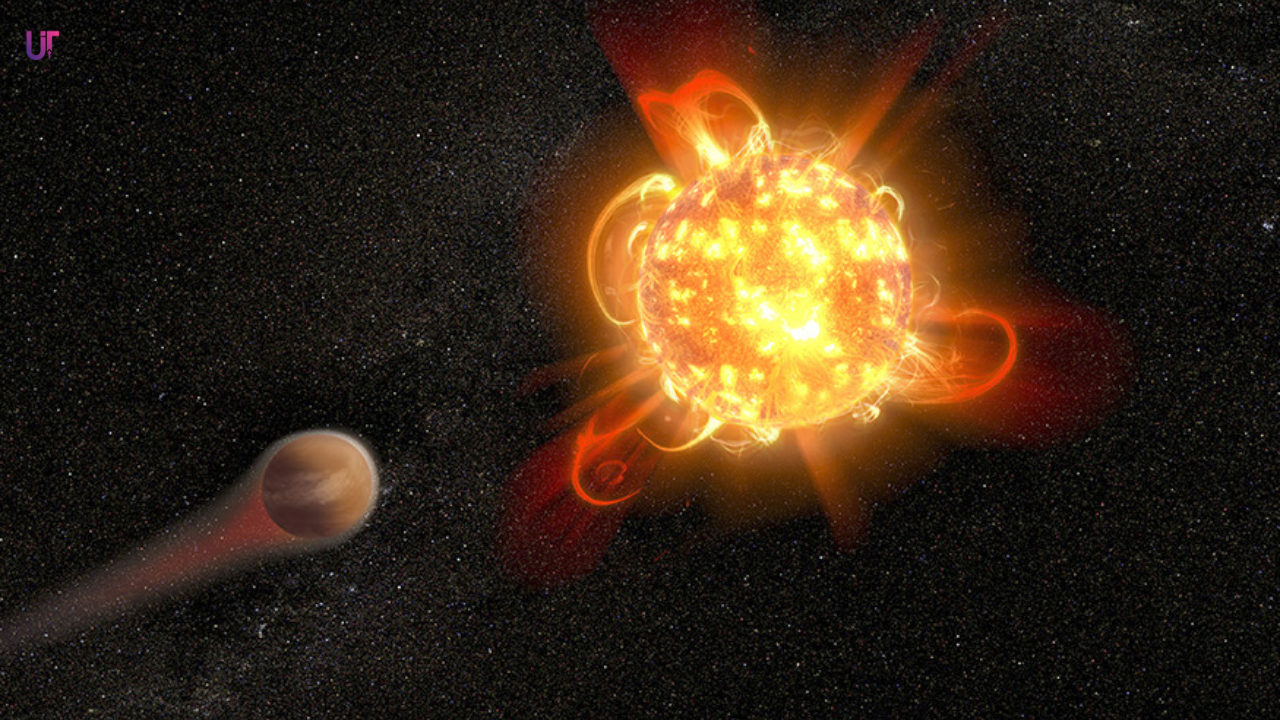
However, there’s a catch: young red dwarfs are known for being very active, often releasing intense solar flares and radiation bursts that could strip away a planet’s atmosphere.
So, while red dwarfs may host billions of planets, whether those worlds can support life remains one of astronomy’s biggest questions.
A Real-World Example: Proxima Centauri
The nearest star to Earth, Proxima Centauri, is actually a red dwarf — just 4.24 light-years away. It’s part of the Alpha Centauri star system.
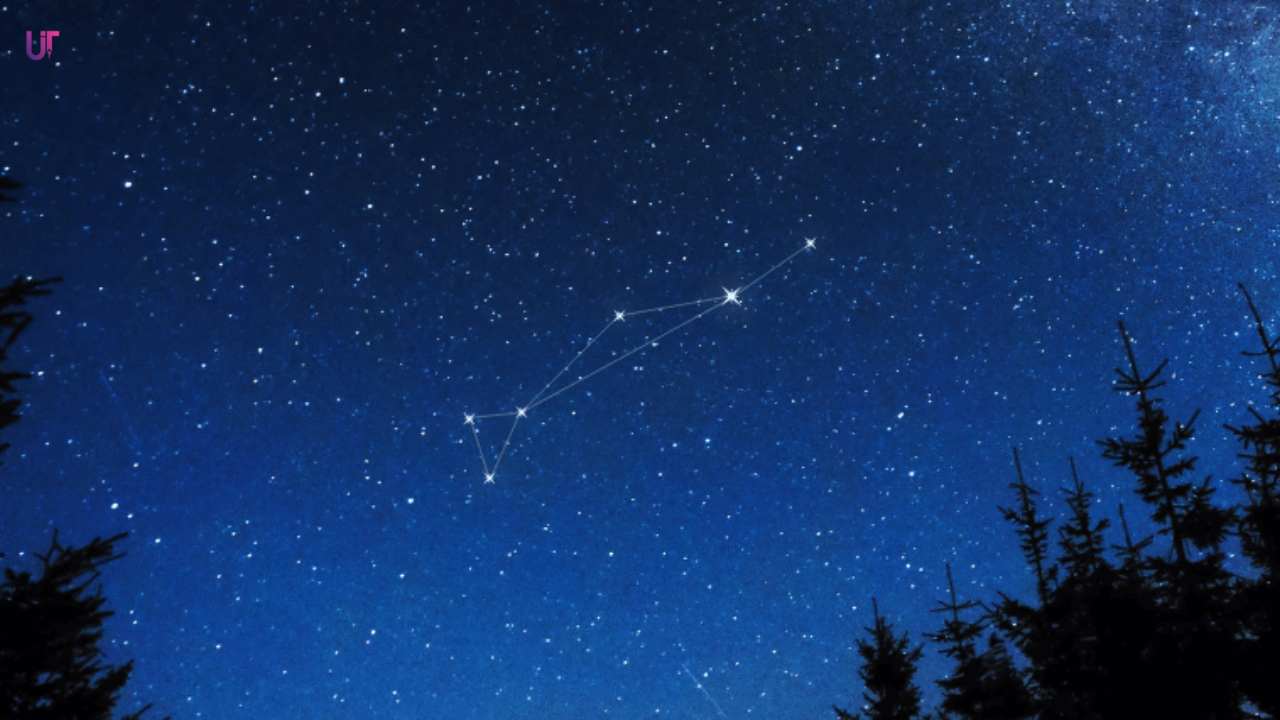
Proxima is small — only about 12% the mass of our Sun — but it’s famous because it hosts at least two planets, one of which, Proxima b, lies in the habitable zone.
Proxima b gets about the same amount of energy from its star as Earth does from the Sun, sparking hope that it could host liquid water. But Proxima’s frequent flares could make the planet’s surface hostile — unless it has a strong magnetic field or thick atmosphere to shield it.
Still, discoveries like this make red dwarfs the prime targets for finding potentially habitable worlds.
The Future of the Universe Belongs to Them
Red dwarfs are more than just faint cosmic sparks — they’re the universe’s timekeepers.
While massive stars will live fast and die young in supernova explosions, red dwarfs will keep shining quietly, long after every galaxy’s brilliant stars have faded.
Eventually, trillions of years from now, these small stars will begin to run out of hydrogen and slowly transform into blue dwarfs, and later white dwarfs — dense, fading remnants of their former selves.
But none of this has happened yet. The universe simply isn’t old enough. Red dwarfs are, in a way, immortal for now — witnesses to cosmic history and guardians of its future.
Why Red Dwarfs Matter
Red dwarfs remind us that longevity isn’t about size or brightness. It’s about balance and endurance.
They don’t explode, they don’t collapse, they just persist — quietly sustaining light across the galaxy for unimaginable spans of time.
For scientists, they are windows into how long-term stellar evolution works, and for dreamers, they are the stars that may one day harbor alien life when the rest of the universe grows cold.
So, while the night sky dazzles with brilliant stars and nebulae, remember — the true architects of the cosmos are the ones we cannot see.
The red dwarfs — small, steady, and eternal.