(A Utopedia Entry)
If space is an endless ocean, the habitable zone is that fragile band where worlds can hold liquid water — the ingredient life seems to love the most.
We call it many names:
- The Goldilocks Zone (not too hot, not too cold)
- The Life-friendly Zone
- The Water Zone
It’s the distance around a star where a planet is just right for water to exist as a liquid on its surface.
Not boiling away.
Not frozen forever.
Water matters because, on Earth, life began in water. Every cell, every breath, every heartbeat traces back to that simple truth. So when astronomers search the universe, they chase water like detectives chase clues.
Why Distance From the Star Matters
Think about standing near a campfire:
- Too close → you burn.
- Too far → you freeze.
- The perfect distance → warmth, comfort, life.
Planets behave the same around their star.
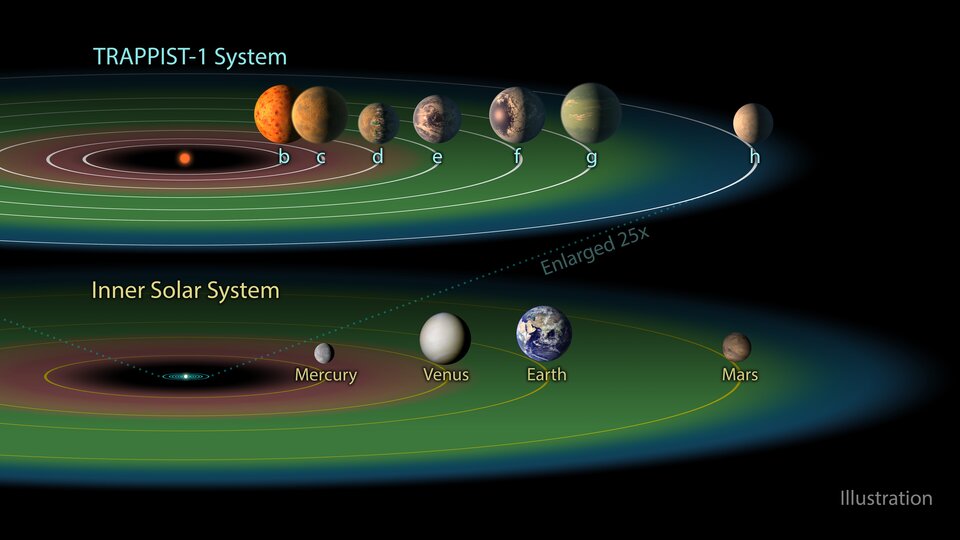
In our solar system:
- Venus is too hot — oceans would boil.
- Mars is too cold — ice dominates, thin air.
- Earth sits in the sweet spot — where oceans, clouds, rain, forests, coral reefs, and humanity flourish.
That “sweet spot” is the habitable zone.
Why Liquid Water Is the Benchmark
Water is special. It stays liquid over a wide range of temperatures, dissolves chemicals, transports nutrients, shapes planets, and builds biology.
Life as we know it:
- Forms in water
- Moves with water
- Depends on water
So, astronomers ask a simple question when hunting for alien worlds:
Could water flow here?
If yes → life might have a chance.
The Habitable Zone Is Not Perfect
A planet inside the habitable zone is not guaranteed to have life. It only means it could.
Being in the zone doesn’t help if:
- The planet has no atmosphere
- It’s a gas giant instead of rocky
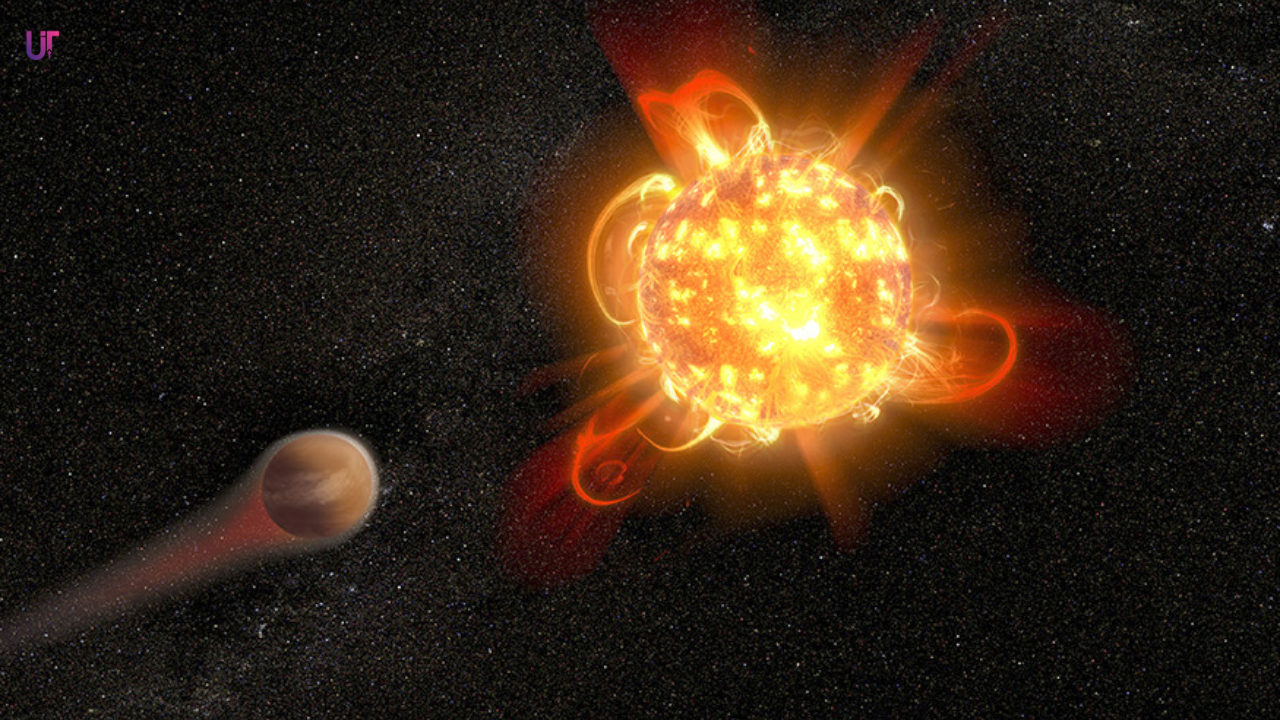
- It’s constantly bombarded by flares
- It has toxic chemistry
- It lost water in the past
Mars sits in (or near) the zone today — but lost its atmosphere and most of its water.
Venus was once like Earth — oceans, clouds — but heat and greenhouse gases destroyed it.
So the habitable zone is a starting point, not a promise.
Different Stars, Different Zones
The size and location of the habitable zone depends on the star.
🔸 Small, cool stars (Red dwarfs)
- Zone is very close to the star
- Planets there may be tidally locked (one side always day, one always night)
- But there are billions of red dwarfs — they might hold countless quiet, ocean worlds
Sun-like stars
- Wider, stable zones
- Earth-type life is most likely here
🔮 Big, hot stars
- Bright but short-lived
- Habitable zone exists but life may not have time to evolve
In other words, the universe’s most common stars — red dwarfs — may host the most alien oceans.
Earth: A Masterclass in Balance
Earth succeeds not just because of distance, but because of balance:
- Right distance
- Right size (keeps atmosphere)
- Magnetic field (shields radiation)
- Plate tectonics (recycles carbon, stabilizes climate)
- Stable sunlight
- Water cycle
Life flourished here because all these pieces aligned like a cosmic symphony.
👁️🗨️ Beyond Water — The Expanded Habitable Zone
Astronomers now think life might survive outside the traditional zone:
- Icy moons with underground oceans (Europa, Enceladus)
- Planets with super-thick atmospheres
- Worlds heated by tidal forces, not sunlight
- Places with liquid methane lakes (Titan)
So the habitable zone is evolving as a concept.
Life may be more creative than we ever imagined.
Why the Habitable Zone Matters
The habitable zone is our first filter when scanning billions of stars.
It tells us:
“Here is where life might bloom.”
Telescopes like JWST, TESS, and Kepler are mapping Earth-size planets in these zones right now.
Every month, we find a new world that could — just maybe — hold oceans and skies.
And that brings us closer to the greatest question in science:
Are we alone?
In Simple Terms…
The habitable zone is the cosmic comfort zone, where water can thrive and life has a chance.
Not too hot.
Not too cold.
Just right — like the story of Goldilocks, but written in starlight.
It’s the universe keeping a door open for life.
And we are only just beginning to knock.
Key Takeaways
- Habitable zone = region where liquid water can exist
- Distance depends on the star’s energy
- Being in the zone ≠ guaranteed life
- Life may also exist outside it
- The universe is full of possible “Earth-like” worlds
Focus Keyword: Habitable Zone
Supporting Keywords: Goldilocks zone, exoplanets, liquid water, life in space, Earth-like planets, stellar systems, space life search